For years, architecture has been sold to us as an image- the taller the tower, the shinier the glass, the more “successful” the building seems. Cities compete for landmarks, museums compete for attention, and architecture often feels like something made to be photographed rather than lived in as these projects are usually visually striking, expensive, energy-intensive, but often disconnected from the realities of the people who use them.
In many African cities and communities, such a model simply does not translate. Rapid urban growth, housing shortages, rising temperatures, and economic limits mean architecture cannot afford to be symbolic alone. It has to respond directly to climate, resources, and social needs.
This has led to a growing shift toward context-driven design- architecture shaped by local materials, environmental conditions, and patterns of daily life. Instead of importing global styles, many African architects are developing solutions that are specific, grounded, and practical.
Here, “good design” is not measured by visual drama, but by how well a building performs.
1. Gando Primary School, Burkina Faso- Diébédo Francis Kéré.

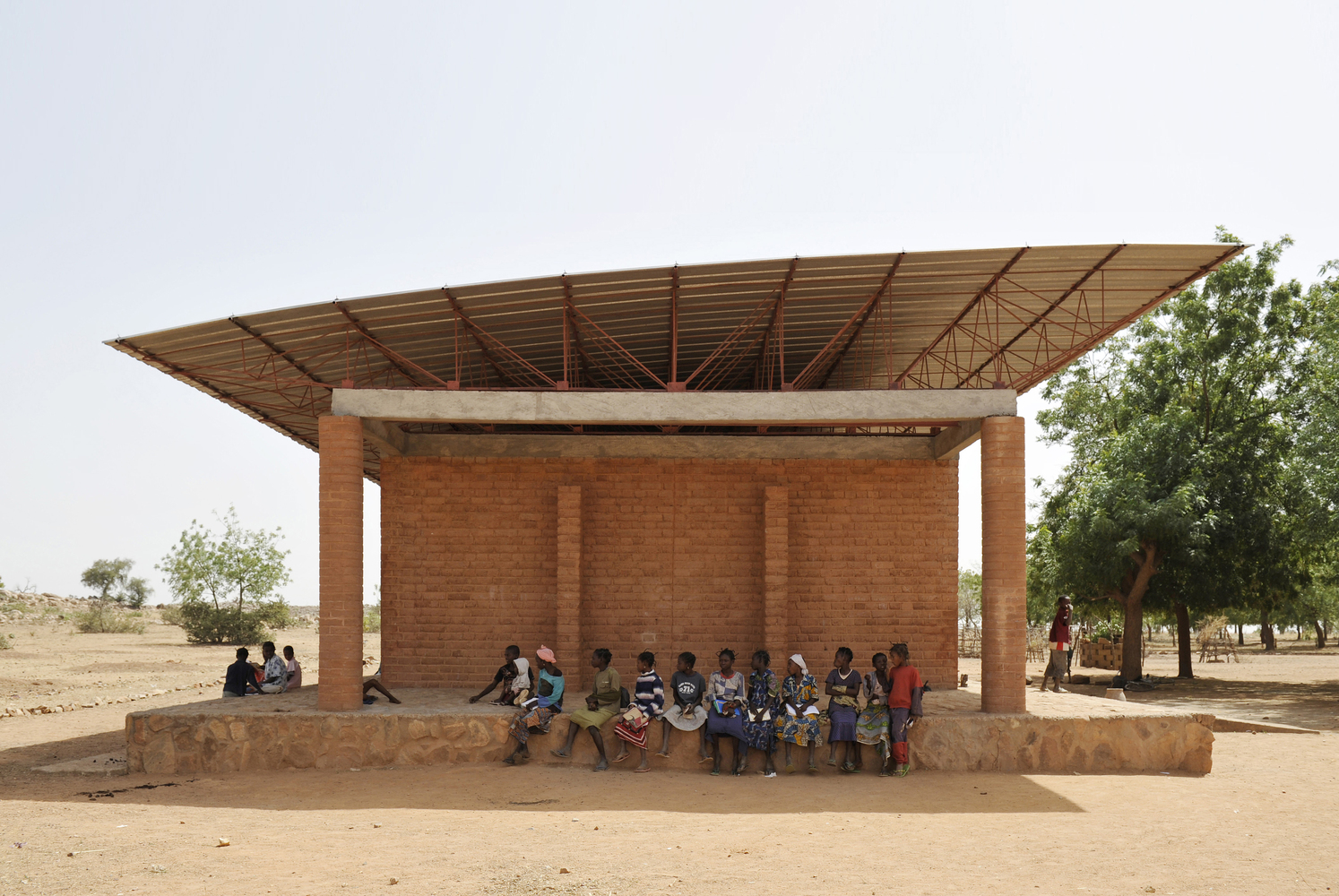
Left: Gando Primary School exterior showing brick facade and raised metal roof. Right: Ventilated interior of a classroom in Gando Primary School. Images via ArchDaily/ Kéré Architecture/ Collage by Soyinka Oluwadunmininu
Few projects capture this approach as clearly as the Gando Primary School in Burkina Faso, designed by architect Diébédo Francis Kéré.
Located in a rural village with extreme heat and limited resources, the school was built using locally made clay bricks instead of imported concrete. These bricks naturally regulate temperature, keeping classrooms cool during the day and warm at night.
The roof is lifted slightly above the walls, allowing hot air to escape and fresh air to circulate- a simple but effective passive cooling strategy that removes the need for air conditioning.
What makes the project especially powerful is not just the building itself, but how it was made. Members of the local community were trained to produce the bricks and take part in construction. This reduced costs, created skills, and built a strong sense of ownership.
The school does not look like a global architectural landmark, but it works exceptionally well, it responds directly to climate, labour, and material realities, showing that architectural intelligence does not require complex technology- it requires understanding context.
2. La Brique Earth Housing, Dakar, Senegal- Marc Thorpe.

Left: La Brique Earth Housing compressed earth block façade in Dakar. Right: Close-up view of the Earth-brick material texture. Images via ArchDaily / Marc Thorpe Design / Collage by Soyinka Oluwadunmininu
In Dakar, where rapid urban growth and housing shortages shape everyday life, La Brique Earth Housing offers another strong example of architecture driven by real needs.
The project explores the use of compressed earth blocks as an alternative to conventional concrete. Made from local soil, these blocks require less energy to produce and perform better in hot climates, keeping interiors naturally cool.
The focus here is affordability. The housing is designed for low-income residents, using materials and construction methods that reduce cost without sacrificing comfort or durability. Instead of relying on imported systems, the project demonstrates how local resources can support contemporary living.
La Brique reframes sustainability not as a luxury idea, but as a practical necessity. It shows that environmentally responsible design can also be economically realistic and that innovation often lies in working with what already exists.
3. Thread Artists’ Residency, Sinthian, Senegal- by Toshiko Mori.

Left: Threads Artist's Residency blends passive design with community use. Right: The shaded courtyard and sloped roof responds to Senegal's seasonal climate. Images via AKTC / © Dev TV / Collage by Soyinka Oluwadunmininu
At first glance, Thread Artists’ Residency in rural Senegal may seem very different from a school or housing project. It is a cultural space designed for artists, not a basic public facility. Yet it follows the same core principle: architecture shaped by environment and use.
The residency is built using earth, concrete, and simple geometric forms that respond directly to the intense heat and open landscape. It's thick walls provide insulation, courtyards create shaded outdoor spaces, and the buildings are positioned to allow natural airflow.
There is no unnecessary decoration in this building, the architecture is quiet, restrained, and deeply connected to its surroundings showing that even cultural architecture can reject spectacle.
Taken together, these projects point toward a clear shift in how architecture is being practiced across the continent.
They prioritize:
climate over appearance
function over form
people over image
This approach feels not just relevant, but necessary, especially in a world facing climate crisis, resource scarcity, and growing inequality. It challenges the idea that innovation must be high-tech or visually loud by suggesting that the future of architecture may lie in simplicity, adaptability, and local intelligence.
Across Africa, architects are quietly redefining the discipline by designing for heat, community, affordability, and daily use. Their buildings do not aim to impress the global eye, they aim to solve real problems.
In doing so, they offer a powerful lesson to the rest of the world: that the most meaningful architecture is not the kind that dominates skylines, but the kind that understands its place environmentally, socially, and culturally.
Architecture that works is not defined by how much attention a building attracts, but by how well it supports life.