Some of the world’s most recognisable buildings were shaped by women whose names rarely made the headlines. Their ideas guided movements, influenced how cities grew, and pushed architecture beyond the boundaries of their time, yet their contributions often lived in the shadow of someone else’s credit.
Today, names like Zaha Hadid, Kazuyo Sejima, and Jeanne Gang are widely recognised, reflecting a growing acknowledgment of women’s influence in architecture. However, this visibility is only recent and it masks a much longer history of women whose work shaped cities without receiving credit.
For much of the 20th century, architecture made room for women to work, but not to be visible. Many were hired as designers, planners, researchers, or interior specialists which were all essential roles, yet public credit typically went to a single “lead architect,” almost always a man.
Several patterns fed this:
Firms often credited projects to the company or male partners, not the individuals who shaped the work.
Awards and publications preferred a single “genius” narrative instead of acknowledging collaboration.
Women rarely held leadership positions, even when they drove major design decisions.
Documentation from the era didn’t value or track contributions outside the spotlight.
As a result, many women helped shape iconic buildings and movements, but their stories were rarely documented with the same clarity as their male counterparts.
Today, architecture is slowly rewriting its own history, uncovering the women whose fingerprints were always there, even if their names weren’t. This piece revisits four of them- women who shaped the field quietly, powerfully, and with a depth the public rarely saw but the system depended on.
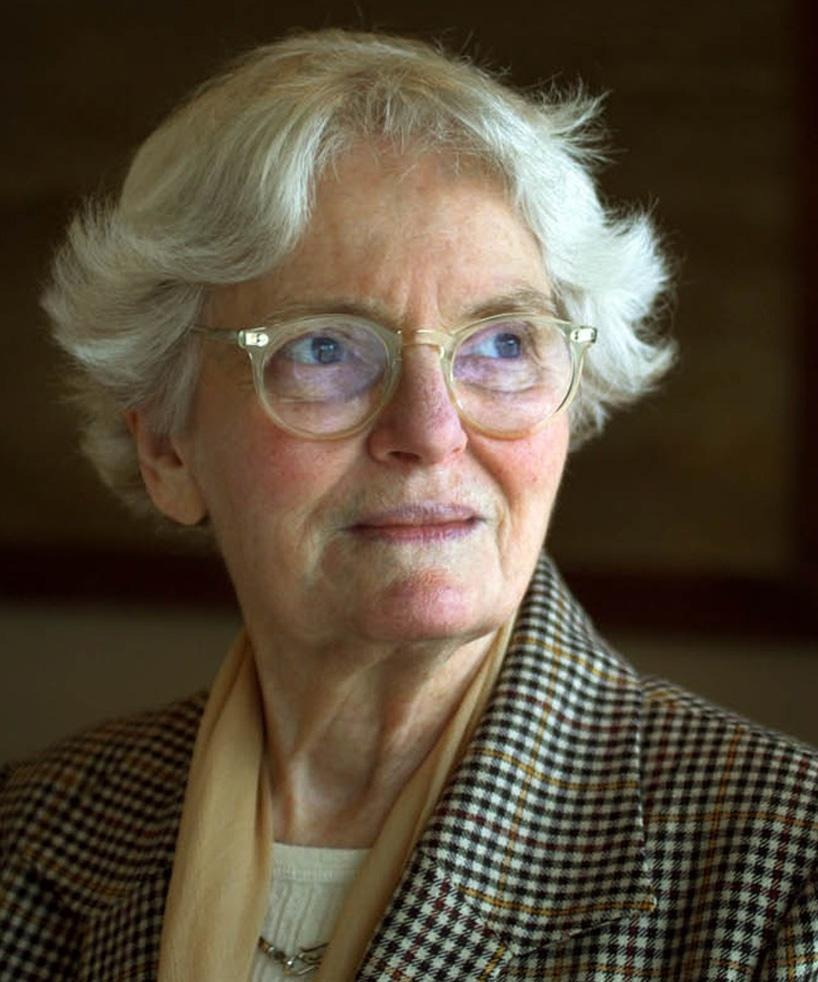
1. Denise Scott Brown- (American, 1930 till date).

Denise Scott Brown. Photo credit: frank hanswijk. Courtesy: venturi, scott brown and associates.
Denise Scott Brown is one of the most influential thinkers in postmodern architecture. Her work, especially the landmark book Learning from Las Vegas, challenged architects to look beyond pure form and engage with the realities of everyday urban life: signage, sprawl, light, movement, and the chaotic poetry of real cities.

Cover of Learning from Las Vegas,The MIT Press, First Edition, 1972 (Amazon).
Despite co-leading Venturi, Scott Brown & Associates and co-authoring its most influential ideas, she was excluded when Robert Venturi received the 1991 Pritzker Prize alone. That omission sparked international debate and led thousands of architects, academics, and students to petition for her recognition.
For years, her role was treated as secondary, even though many architects privately acknowledged her as the intellectual anchor of the firm’s shift in direction.
Now, her lectures and essays are widely taught, and exhibitions have begun to present her as a central voice not an asterisk in someone else’s story.
2. Norma Merrick Sklarek- (American, 1926–2012).

Norma Merrick Sklarek. © Green Associates.
Norma Merrick Sklarek built her career in architecture at a time when few women, and even fewer Black women, were given that responsibility. She worked on major projects including:
The Pacific Design Center, Los Angeles.
The U.S. Embassy, Tokyo.
LAX Terminal 1.

Pacific Design Center, Los Angeles, 1978 (Norma Merrick Sklarek, project team). © Gruen Associates.
While these projects became widely known, her role was often hidden behind firm names or male project leads. Sklarek was responsible for coordinating teams, resolving technical challenges, and ensuring projects were delivered.
She later co-founded the first architecture firm in the United States led by Black women, redefining what leadership in the profession could look like. Today, her legacy is recognised not only for its architectural impact but for the barriers she dismantled.
3. Charlotte Perriand- (French, 1903–1999).

Charlotte Perriand during her second trip to Japan in 1955. Photo credit: Jacques Martin. © Charlotte Perriand Archives.
If modern minimalism had a silent architect, it was Charlotte Perriand. When she joined Le Corbusier’s studio at just 24, she brought a fresh modern sensibility that reshaped interiors, furniture systems, and the overall approach to human comfort in modern design.
Many iconic pieces historically credited to Le Corbusier alone were actually designed by Perriand, including tubular steel chairs and modular interior systems that defined early modernism. For decades, her work lived in the shadow of her male collaborators,being absorbed into a narrative that prioritised male authorship.

Dining Room 28 (1929), Le Corbusier, Pierre Jeanneret, Charlotte Perriand © F.L.C. / Adagp, Paris, 2019 © Jean Collas / AChP
But time has been correcting that narrative. Major retrospectives in Europe and Asia have reintroduced her as a pioneer whose influence extends far beyond furniture, but into the very language of modern living. Her designs remain remarkably current, proving how deeply her vision shaped contemporary interiors.
4. Lina Bo Bardi- (Italy/Brazil, 1914–1992).

Portrait of Lina Bo Bardi. Photo credit: Pietro Bardi, 1947, courtesy of Instituto Bardi.
Lina Bo Bardi’s architecture is bold, playful, and emotionally alive. Italian-born but profoundly shaped by Brazil, she developed a design language rooted in culture, community, and accessibility.
Her most iconic building, MASP (São Paulo Museum of Art), is instantly recognisable for its floating structure and the open civic space beneath it a design that made public space a priority long before it became a global design talking point. At SESC Pompéia, she transformed an old factory into a cultural and recreational complex where everyday life- play, conversation, movement, became central to the design.

The São Paulo Museum of Art, São Paulo. Photo by Leonardo Finotti via Dezeen.
Yet during her lifetime, Bo Bardi was rarely placed alongside Brazil’s male modernist icons. Her work didn’t fit the aesthetic narrative others were pushing, so it was easy for the industry to overlook her.
Today, she is celebrated worldwide. Her emphasis on people over prestige feels more urgent and inspiring than ever.
Together, these stories highlight a consistent pattern in architectural history, even when recognition was limited or absent. Their work was not marginal, it was foundational.
As architectural discourse continues to shift, there is growing recognition that the profession has always been collaborative. Revisiting these contributions offers a clearer understanding of how architecture is made- through
For readers, this broader view encourages a more critical engagement with the built environment. It invites us to question familiar narratives, look beyond singular names, and recognise the many people whose work has shaped the spaces we inhabit everyday.